When alarms audio and smoke creeps under the door, concept becomes muscle mass memory. The initial encounters people look to are typically wearing the chief warden hat, and what takes place in the following 3 minutes tends to set the tone for the entire occurrence. PUAFER006, Lead an Emergency Situation Control Organisation, rests at the heart of that moment. It concentrates on sensible leadership, coordination with emergency situation solutions, and making decisions that safeguard life and limit damages. I have educated wardens that took care of discharges in less than four minutes in complex multi-tenant sites, and I have actually explored near-misses where confusion added important minutes that no one might pay for. The difference seldom comes down to gadgets or laminated plans. It comes down to people trained to lead, and frameworks that sustain them.
This article distills lessons from chief warden training, cross-references with the realities of PUAFER006, and ties in the foundation given by PUAFER005, Run as Component of an Emergency Control Organisation. If you run fire warden training, handle a facility, or function as a chief emergency warden, the goal is simple: entrust to a clearer sense of what to drill, what to measure, and how to lead when the air is thick and the clock runs fast.
Helpful hintsThe ECO is a team sport, management is the playbook
An Emergency Control Organisation (ECO) is more than a roster of names. Done well, it is a living system. PUAFER005 builds individual capability for wardens: door moves, location checks, connecting with passengers, helping people who require help, and basic use of tools like warden intercom phones. PUAFER006 layers case leadership in addition to that, which indicates the chief warden works with the relocating parts, sets tempo, and adapts the strategy to the scene.
I encourage facilities to quit considering the ECO as a power structure for its own purpose and start thinking in regards to functions that produce choice clearness. On the day something goes wrong, it needs to be distinct that is the chief warden, that leads each floor or zone, that handles interactions, and that serves as deputy all set to step in if the principal is cut off or crippled. When everybody comprehends that structure, the chief warden's voice can assist hundreds without shouting.
In practical terms, the chief warden normally develops a control point, validates the alarm type and place, initiates investigations, and afterwards triggers a presented reaction. Do not rush straight to complete emptying if your procedures and local codes allow evaluation first. Numerous alarm activations are genuine cautions with benign reasons. That stated, the chief fire warden need to fit pulling the large lever the moment a threat is confirmed or believed with sensible reason. Reluctance is even more hazardous than a false alarm, especially for fires that can blink over in minutes.
The colours on the hats are not decoration
People inquire about fire warden hat colour far more than you might anticipate. That is not vanity. Aesthetic signs issue under tension. In many Australian workplaces, wardens wear red safety helmets or caps, and the chief warden hat is white. The chief fire warden hat colour also signals to attending firemens whom to approach on arrival. You do not need helmets for every single drill, however, for online cases and big exercises the colour-coded headwear makes instructions less complicated to comply with. If your work environment makes use of tabards or vests rather than headgears, keep the same discipline about colour and markings so personnel and site visitors can determine the chief warden and flooring wardens at a glance.
The work prior to the work: pre-incident prep work that in fact pays off
Chief warden training typically obtains lowered to a checklist. I favor two tracks: develop the muscular tissue, after that examine the judgement.
Start with framework proficiency. A chief warden requires more than a passing experience with the emergency warning and intercommunication system, emptying representations, staircase pressurisation if applicable, smoke doors, and any fire indicator panel. Know what "silence", "acknowledge", and "leave" functions do in your structure, not simply theoretically. On one site, the chief warden presumed a panel area isolate would silence sounders on a tenant floor for testing. It subdued a crucial detector rather. We dealt with that with targeted walkthroughs and annotated images in the control folder.
Next comes people mapping. Fire warden requirements in the workplace consist of comprehending owner accounts: mobility, hearing, or vision demands, language assistance, and risky procedures like warm works or labs. Keep a dynamic listing of individuals that require help, with privacy controls. One of the most practical design utilizes wardens appointed to people as opposed to relying upon impromptu excellent intentions.
Training has to after that move beyond classroom slides. A solid warden course blends PUAFER005 for wardens and PUAFER006 for chief wardens, with scenario-based exercises. As an example, run a drill where a stairwell is smoke-logged in the scenario, so the chief fire warden must reroute discharge circulation to the secondary exit. Include a curveball such as a blocked fire door or an elevator that continues servicing in spite of recall, which can happen with damaged interfaces. This is where the chief warden responsibilities become real: making the telephone call to divert, connecting modifications clearly, and documenting the reason afterward.
The first five minutes: a trusted rhythm
In most cases the very first 5 minutes determine the rest. A disciplined rhythm helps. Consider it as locate, examine, choose, and connect. If the building is big, delegate evaluation tasks immediately.
Here is a compact activity series I have actually seen work across health care, industrial offices, and education and learning campuses. Treat it as a theme to adjust, not scripture.
- Assume control at the Emergency situation Control Centre or recognized control factor, recognize on your own as chief warden, and start a running log with times and actions. Confirm alarm system information at the panel or with structure automation, dispatch the closest warden to investigate if secure, and request updates on radio at set intervals. Prepare to intensify: alert emergency services if required by the alarm type or website plan, and pre-alert floor wardens to wait for discharge or shelter-in-place instructions. Decide on activity based upon evidence and danger resistance for your occupancy, after that launch a partial or full emptying, or a controlled return if a false alarm is verified and conditions are safe. Maintain interactions: upgrade residents via PA or voice alarm systems, encourage responding fire services at arrival with a succinct short, and track warden records to confirm all zones are cleared.
That is the very first of two lists in this article, and it earns its location since repeating develops speed. The rhythm narrows choice tiredness when adrenaline is high.

Communications that punctured noise
Incident management lives or passes away on clear interaction. PUAFER006 emphasises structured messages. The voice over the must be tranquil, slow-moving, and straight. In multi-tenant structures, avoid jargon. People need to know what to do and where to go, not technical information. If you say "evacuate through the east staircases", anticipate half the building to hesitate unless the east staircases are clearly marked on every floor. Consider adding primary directions on floors plans near leave doors, or simple calling like "stairs near lifts" and "stairs near kitchen area".
Radios utilized by wardens need discipline. Short transmissions, telephone call indicators, and readbacks stop errors. In a loud atrium you will not hear subtitles. Establish a requirement like "Floor 12 Warden to Chief, smoke noticeable in printer space, commencing move, will report all-clear or fire located within two minutes." Chief reacts with "Replicate Flooring 12, two-minute upgrade expected." It sounds formal in print, yet on the day it reduces frantic back-and-forth that wastes seconds.
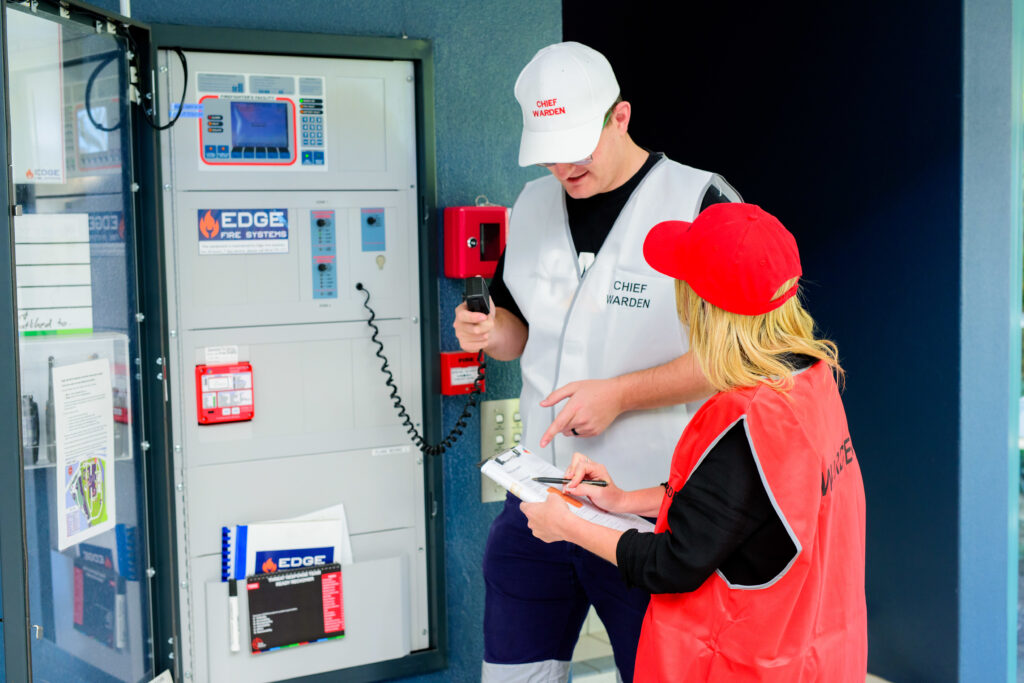
For external sychronisation, the chief warden or delegate greets fire teams curbside with a concise short: alarm origin, detector or lawn sprinkler activations, zones left and validated, any type of missing out on person records, and known hazards like gas cyndrical tubes or lithium battery storage. Bring the fire sign panel hard copy if available and a map noted with current standing. This handover gains trust fund promptly and maintains teams concentrated on where they can add the most value.
Evacuation style is a choreography problem
A good strategy takes into consideration circulation price, congestion points, and human propensities. People try to leave the way they got in. If the primary lobby is blocked, they waste time unless wayfinding is solid and wardens are placed ahead of the crowd. Startle discharges when feasible, particularly in skyscrapers or healthcare facilities, where complete activity all at once can produce crush risks. The chief fire warden duties include selecting the appropriate emptying technique for the hazard: prompt and complete for fast-moving fires, presented for non-fire events or where haven areas are more secure, or horizontal evacuation in medical care settings.
I when viewed a drill where everyone channelled to one stairwell due to the fact that the various other was secured at a mezzanine landing. The efficient lesson was not "open the door." It was "test every door on the path, every single time." Door equipment adjustments. Occupants bring furniture also close to exits. A single plant screen can tighten a corridor sufficient to reduce a crowd. Consist of these sign in your regular warden training.
Differences between PUAFER005 and PUAFER006 that matter
It helps to be explicit concerning department of duty. Wardens educated under PUAFER005 operate as part of an emergency control organisation. Their quick is to execute instructions, sweep locations, assist residents, record status, and make use of regional expertise. PUAFER006 adds command responsibilities: establishing the first response, working with wardens, making decisions under uncertainty, liaising with emergency situation services, and regulating the return to normal.
Where some chief warden programs go wrong is assuming experience as a floor warden automatically equates to management under stress. It seldom does without method. Chief warden training must include decision-making under insufficient information, triaging simultaneous records, and recognizing when to shift from examination to evacuation.
Human variables: stress, group actions, and the silent individual in the corner
Real events remind you that panic is uncommon but complication prevails. Individuals ice up at their desks, especially if alarms are frequent and usually benign. The chief warden requirements consist of countering complacency. Usage voice statements that reflect the gravity of the situation without theatrics. Even a straightforward "This is not a drill" modifications actions. Designate wardens to sweep zones purposely, and require physical checks of bathrooms, meeting rooms, and copy rooms. In one workplace evacuation I observed, 2 people with noise-canceling earphones worked through the initial 3 minutes. A warden unlocking and making eye get in touch with fixed the problem.
Remember the quiet person who requires aid. Emergency warden training ought to cover just how to approach somebody who hesitates to relocate, whether because of stress and anxiety, wheelchair obstacles, or social issues. Technique escorting down staircases using group strategies and accepted equipment if your site has evacuation chairs. It is much better to rehearse with empty chairs and corridors than to improvisate with an actual person and a congested stairwell.
Documentation that works under pressure
If your emergency situation plan lives only in a policy folder, it will fail you. Put usable essences where wardens work: laminated quick-reference cards at the warden control phone, a printed list in the chief warden go-bag, and a digital duplicate obtainable offline. See to it your maps reflect current fit-out, with fire sign panel zones matching floor plans. I keep a habit of composing time-stamped decisions on a single A4 sheet throughout events. Later on, this comes to be the backbone of the debrief and any type of reportable occasion documentation.
Chief warden duties continue after the sirens fade. Run a hot debrief within 24 hours while memories are fresh. Welcome wardens to share rubbing factors: radios that stopped working, doors that stuck, messages that confused, or muster points that really felt risky. Transform those notes right into targeted modifications, not common "improve interaction" platitudes.
Working with restraints: older structures, mixed occupancies, and shift work
Not every office takes pleasure in modern-day systems. Older structures bring quirks: uneven stair risers, dead places for radio signals, or fire doors that have been repainted into location throughout the years. Mixed-tenant sites complicate the ECO framework. You could have multiple fire warden courses operating with various standards. In those atmospheres the chief fire warden responsibilities frequently include diplomacy. Develop a building-wide ECO online forum where renter wardens fulfill quarterly, share contact listings, and perform at the very least one building-wide workout. Settle on radio networks and PA message conventions so every person hears the very same instructions.
Shift job adds an additional layer. If the chief warden only functions days, your graveyard shift may be led by security personnel or a deputy with much less experience. Tailor the chief warden course schedule so each shift has a qualified leader. Construct redundancy. Go for at least two elderly wardens per shift who can lead under PUAFER006 guidance.
The functionalities of training: making it stick
A great warden course is part knowledge, component rep, and component straightforward review. For emergency warden training and chief fire https://elliottfcgf632.wpsuo.com/emergency-warden-training-building-a-resilient-emergency-situation-control-organisation warden training, I advise a blended model: short theory modules, walk-arounds, and situation drills spaced over weeks. Individuals keep better when lessons connect to the spaces they move via everyday. During walk-arounds, explain where channels run, which doors are smoke doors, and how to reach the roofing system hatch if firemans ask. Show the distinction in between the aspirating smoke discovery system and place detectors. Make it responsive. Remove the panel cover with a specialist existing and talk via what each light means.
For assessment, use circumstance injects that pressure judgment calls. Trigger an alarm on level 8 while reporting a separate medical emergency situation on degree 2. View just how the chief warden delegates, and whether they ask for assistance. Debrief carefully yet firmly. Practical method today conserves mayhem on an even worse day.
Certification, compliance, and usual missteps
A PUAFER006 course, provided by a qualified supplier, addresses the proficiency of leading an ECO during a facility emergency. Match it with PUAFER005 for your more comprehensive warden team. Fire warden training requirements differ by jurisdiction, yet the principles hold: designate wardens to meet your structure size and intricacy, provide initial training, and freshen at sensible intervals, often every year. If nothing substantial changes at your site, you can extend refreshers a little, however any refurbishment, lessee change, or system upgrade ought to trigger re-training. A lot of organisations tick package as soon as and allow it fade.
Common bad moves consist of over-reliance on technology and under-reliance on people. A structure with ideal discovery and voice alarm systems still needs wardens to relocate individuals, take care of exceptions, and identify the abnormal. One more mistake is making use of wardens' goodwill without monitoring assistance. If your chief warden responsibilities include establishing the muster point, then you also require authority to maintain it free from vendor deliveries or smoking areas.
Leadership when the unexpected happens
Not every case is a fire. Gas leakages, bomb risks, aggressive intruders, medical emergency situations, and energy failures all ask for different playbooks. PUAFER006 prepares leaders to adapt while using the exact same core principles: collect details, select a protective activity, relocate individuals, and collaborate with -responders. During a power failure in a mid-rise with a mixed occupancy, our chief warden decided to keep occupants in position on higher floorings while engineering verified whether emergency lighting would certainly hold long enough for a regulated descent. That choice prevented jammed staircases and a thrill for dark lobbies. The minute the designer reported a battery concern, the strategy shifted to organized emptyings by flooring, making use of wardens to light landings with torches and security to take care of leaves onto a partly lit street. It was messy, however the sequence and communication avoided injury.
Leadership additionally indicates understanding when to state "quit." During one drill, a flooring warden tried to lug a huge individual down the staircases solo. The chief warden halted the effort and called for the evacuation chair that had actually been being in a locked cupboard. That treatment ended up being the hint to change the site's method: chairs moved to staircase landings, locks removed, and particular pairings designated so the right two individuals always react together.
The little signals that make you credible
People follow leaders they rely on. Reliability is built in tiny moments long prior to an event. If your chief warden hat colour is white, use it during drills without self-consciousness. Examine the with a short courtesy message randomly times, so individuals discover the voice and tempo. Publish brief recaps of drills with real numbers: evacuation time, areas that lagged, and what will change next. When you ask occupants to report threats, repair them promptly. A propped-open fire door is not a suggestion. Close it and describe why in human terms: smoke spread, survivability, and the few extra minutes it buys.
Choosing the right training partner
There are several companies for a PUAFER006 course and chief warden course. When examining, search for instructors who have led in the field, not just educated in classrooms. Ask whether their circumstances mirror your structure type. A skyscraper, a hospital, and a storehouse discover various lessons. See to it the service provider can mix PUAFER006 lead an emergency control organisation web content with site-specific workouts. Guarantee PUAFER005 course alternatives are readily available to build your wider team. If the training is all slides and no strolling, maintain looking.
A simple, site-ready preparedness checklist
Use this compact checklist to evaluate whether your ECO can lead effectively. It is the second and last list in this article.
- Current ECO roster with deputies for each duty, noticeable get in touch with information, and shift coverage verified. Up-to-date floor plans and fire indication panel area maps, printed and digital, examined versus truth within the last quarter. Radios tested weekly, spare batteries available, and usual telephone call indicators used in practice. Documented assisted-evacuation strategy with called pairings, discharge chairs put near staircases, and wardens trained to make use of them. Drills run at varied times with post-drill reports that drive certain renovations, not generic lessons.
Where PUAFER006 satisfies culture
The best emergency situation programs live in the culture, not simply in binders. Wardens really feel appreciated, not volunteered as home window dressing. Passengers treat drills as technique, not a break. Management backs the chief warden's authority and funds the unglamorous repairs. When that culture is present, the concern "what colour helmet does a chief warden wear?" becomes additional to an extra effective one: "Who can I rely on to make the ideal phone call?"
Whether your website classifies the duty as chief warden, chief fire warden, or chief emergency warden, the significance of PUAFER006 is leadership under pressure. Match it with durable warden training under PUAFER005, keep honing through realistic exercises, and deal with every drill as a rehearsal for a day you really hope never ever shows up. If that day comes, the practices you build now will lug people to safety, and that is the just metric that matters.

Take your leadership in workplace safety to the next level with the nationally recognised PUAFER006 Chief Warden Training. Designed for Chief and Deputy Fire Wardens, this face-to-face 3-hour course teaches critical skills: coordinating evacuations, leading a warden team, making decisions under pressure, and liaising with emergency services. Course cost is generally AUD $130 per person for public sessions. Held in multiple locations including Brisbane CBD (Queen Street), North Hobart, Adelaide, and more across Queensland such as Gold Coast, Sunshine Coast, Toowoomba, Cairns, Ipswich, Logan, Chermside, etc.
If you’ve been appointed as a Chief or Deputy Fire Warden at your workplace, the PUAFER006 – Chief Warden Training is designed to give you the confidence and skills to take charge when it matters most. This nationally accredited course goes beyond the basics of emergency response, teaching you how to coordinate evacuations, lead and direct your warden team, make quick decisions under pressure, and effectively communicate with emergency services. Delivered face-to-face in just 3 hours, the training is practical, engaging, and focused on real-world workplace scenarios. You’ll walk away knowing exactly what to do when an emergency unfolds—and you’ll receive your certificate the same day you complete the course. With training available across Australia—including Brisbane CBD (Queen Street), North Hobart, Adelaide, Gold Coast, Sunshine Coast, Toowoomba, Cairns, Ipswich, Logan, Chermside and more—it’s easy to find a location near you. At just $130 per person, this course is an affordable way to make sure your workplace is compliant with safety requirements while also giving you peace of mind that you can step up and lead when it counts.